Fluently
A first call for complete beginners
An AI tutor for spoken English. I improved the first call for beginners in the app and on the web: the tutor now understands the learner's native language and helps them start speaking English sooner.
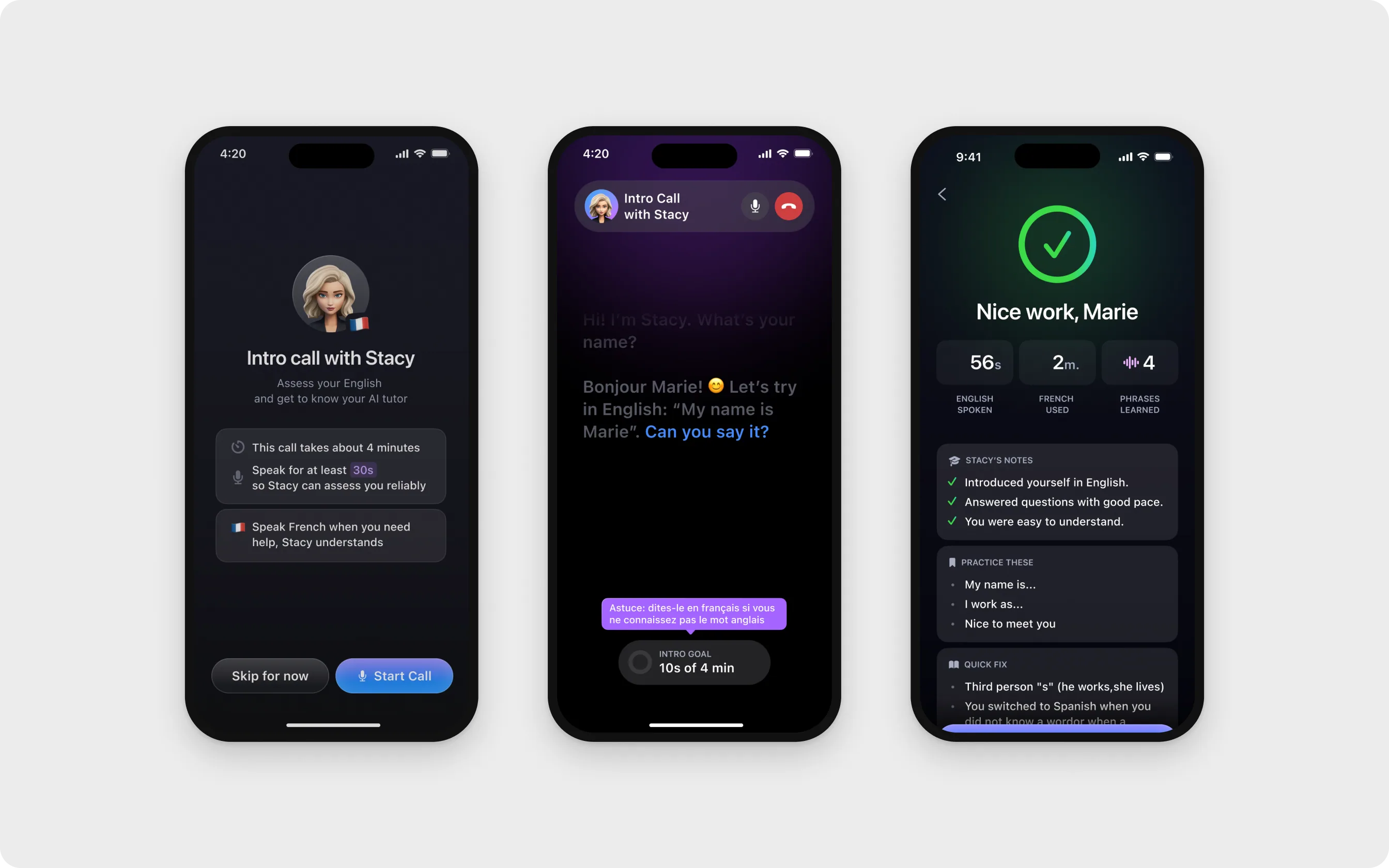
Beginners left on the very first call, before they understood why they needed the app
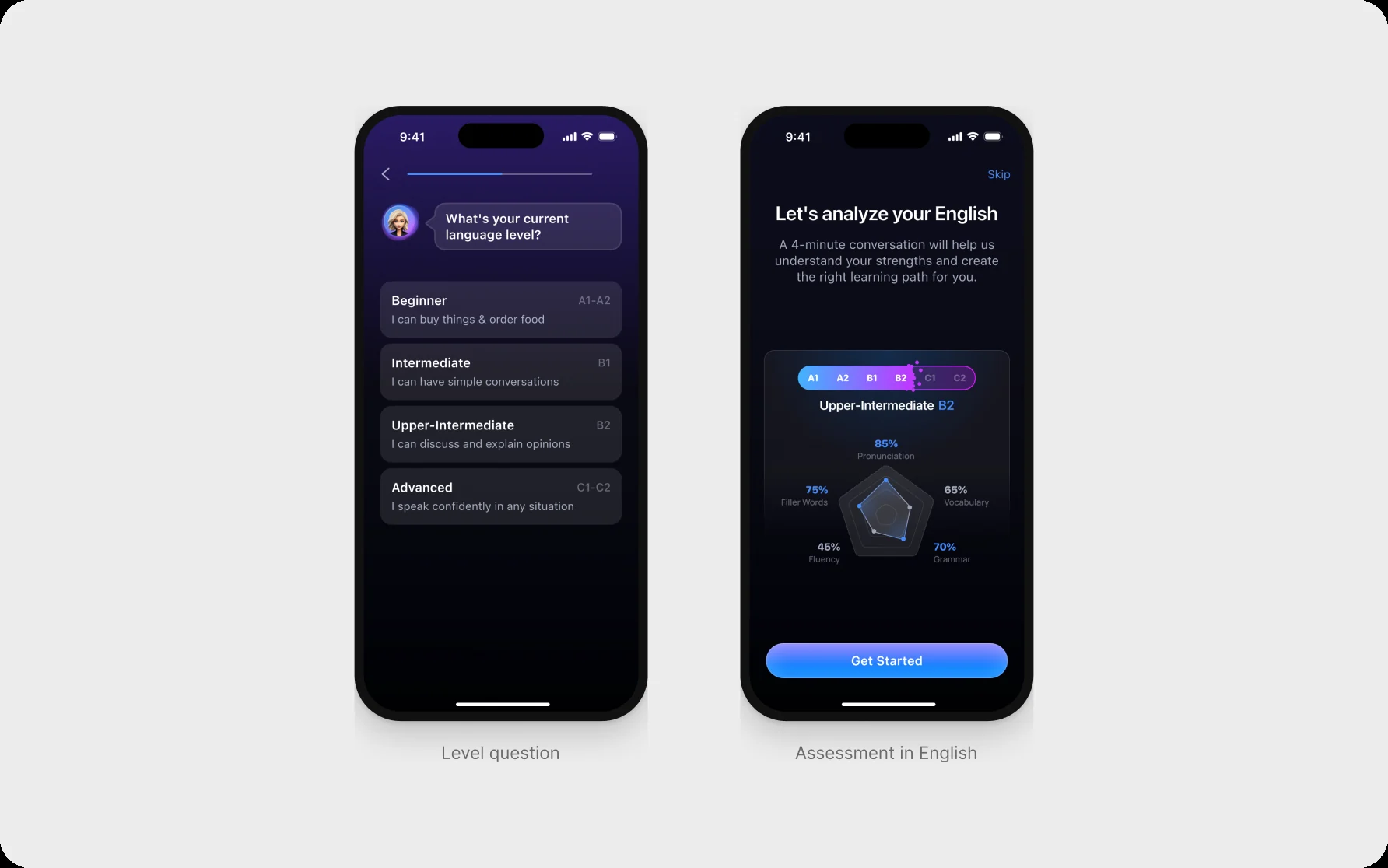
Fluently onboarding ends with a four-minute call in English where the tutor sets the learner's level. A1-A2 beginners didn't understand the question, went quiet and closed the app. Those who made it to the end saw a chart with low scores and didn't know what to do next.
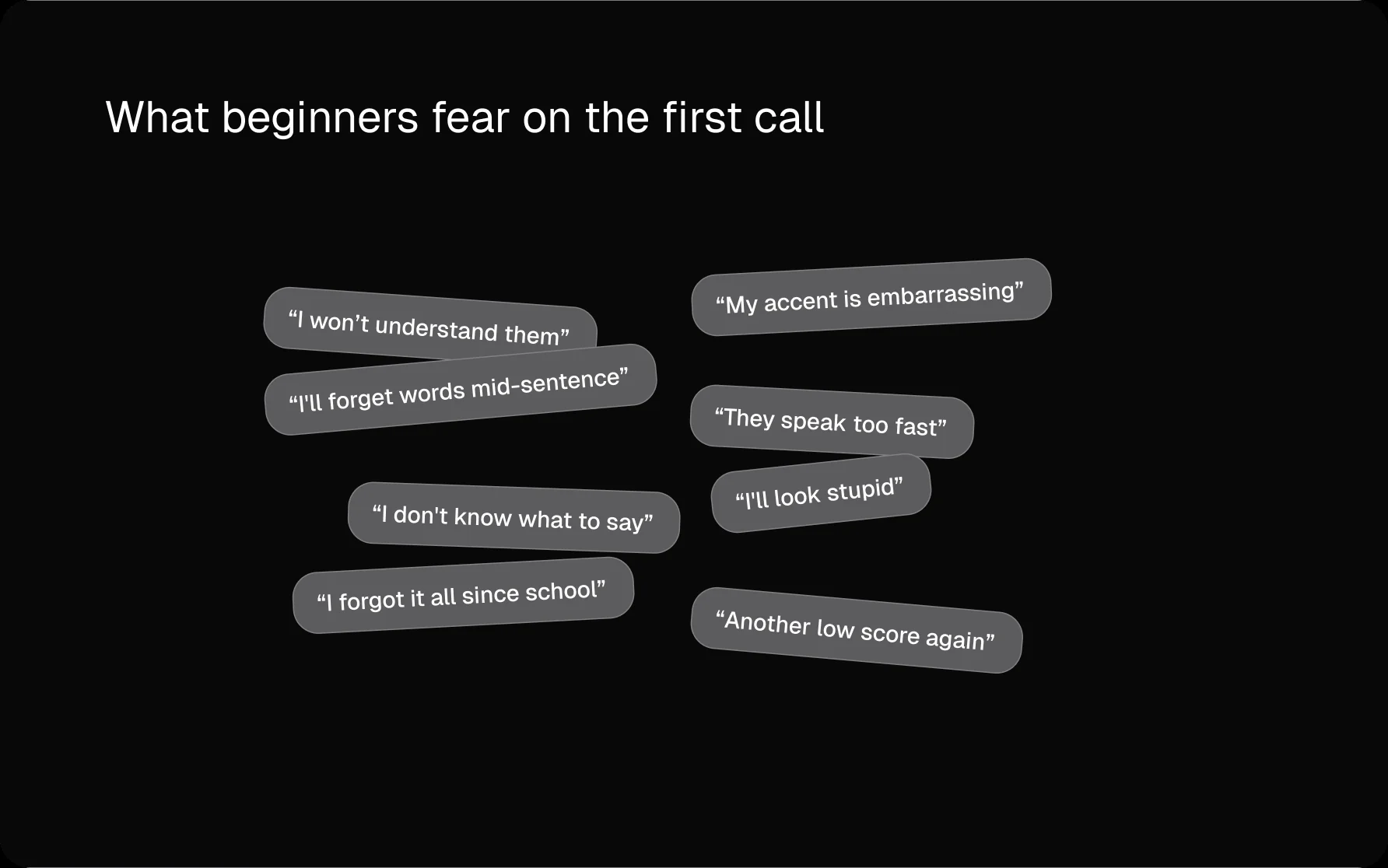
I designed a first call after which a beginner says at least a couple of phrases instead of closing the app.
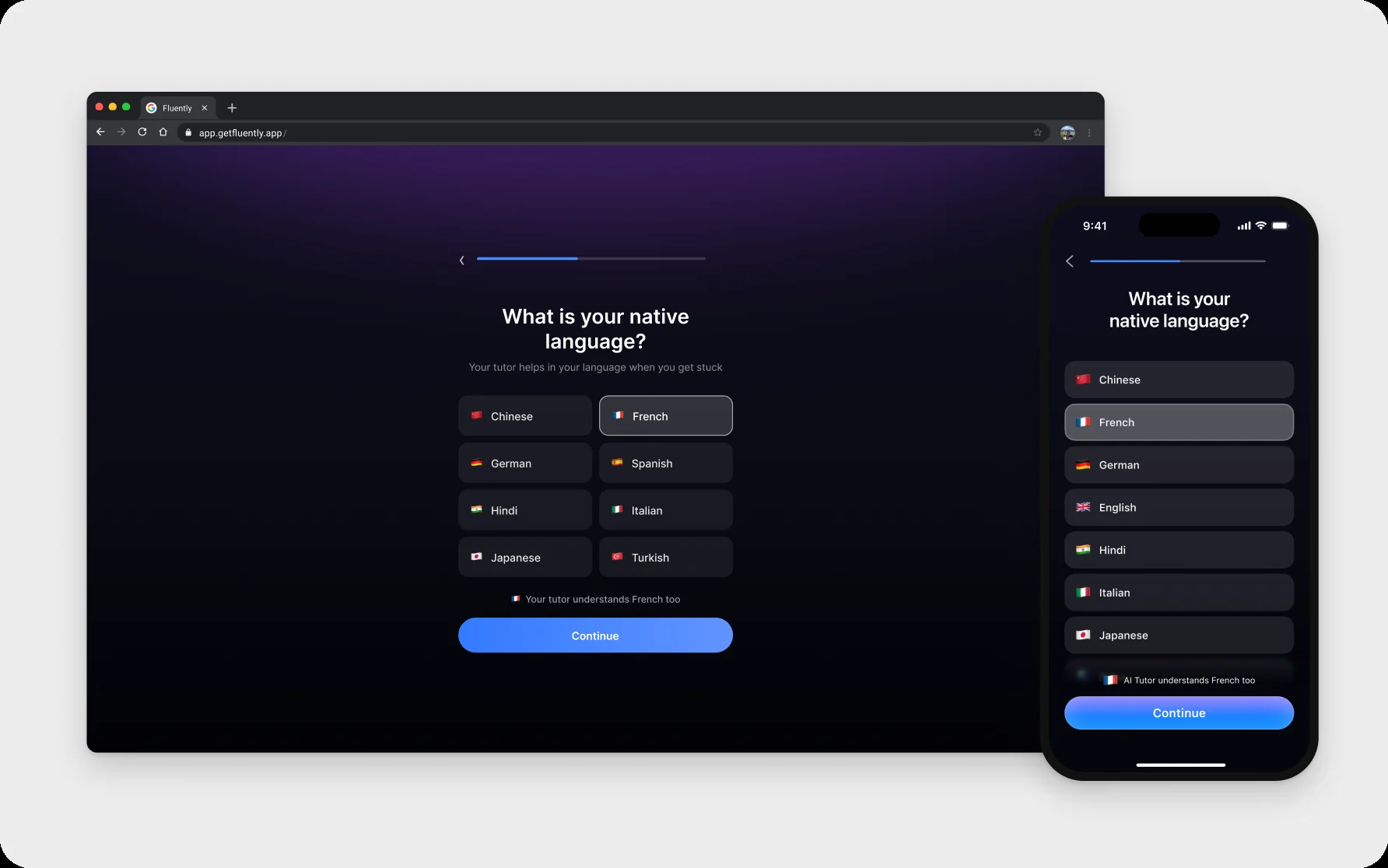
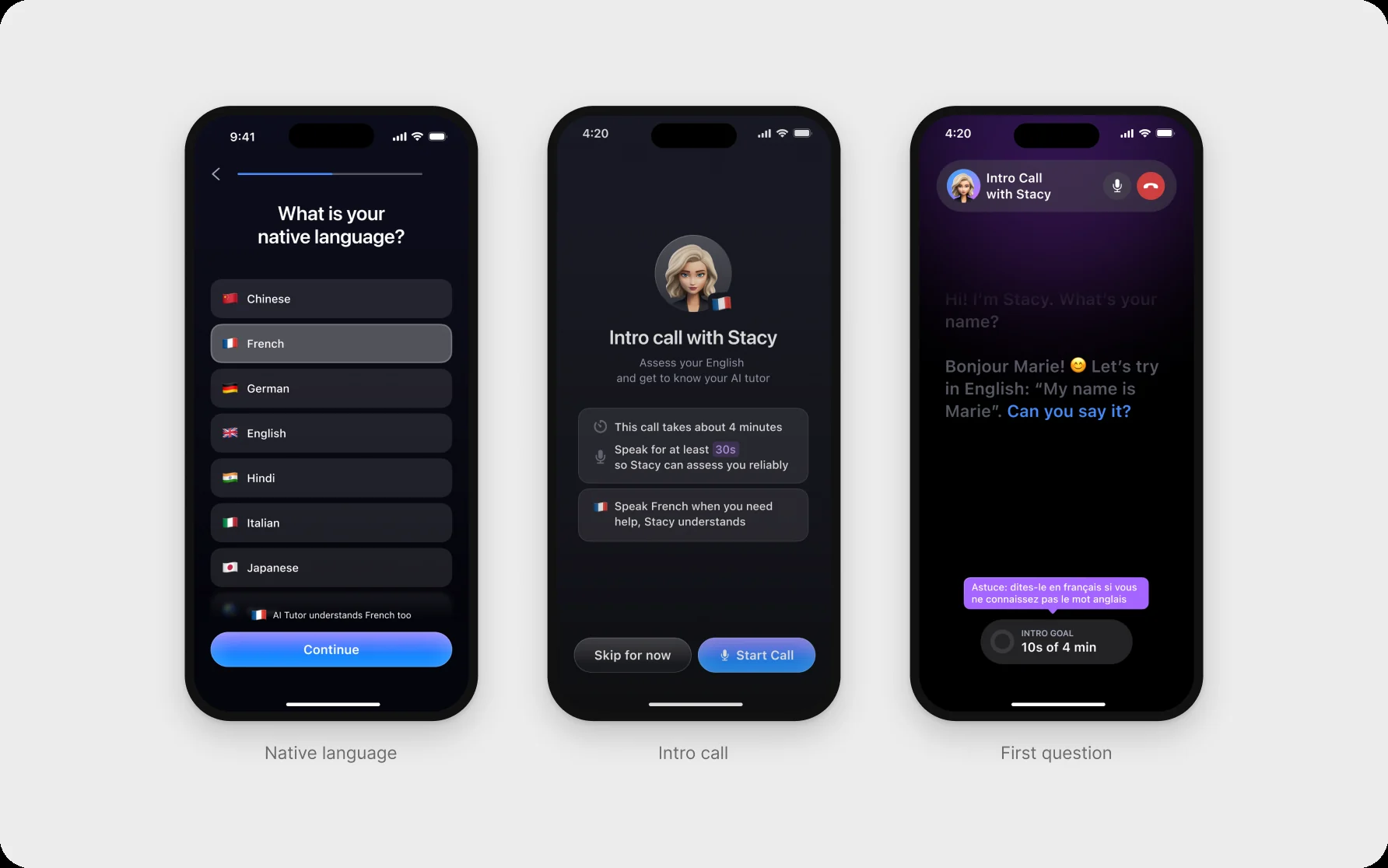
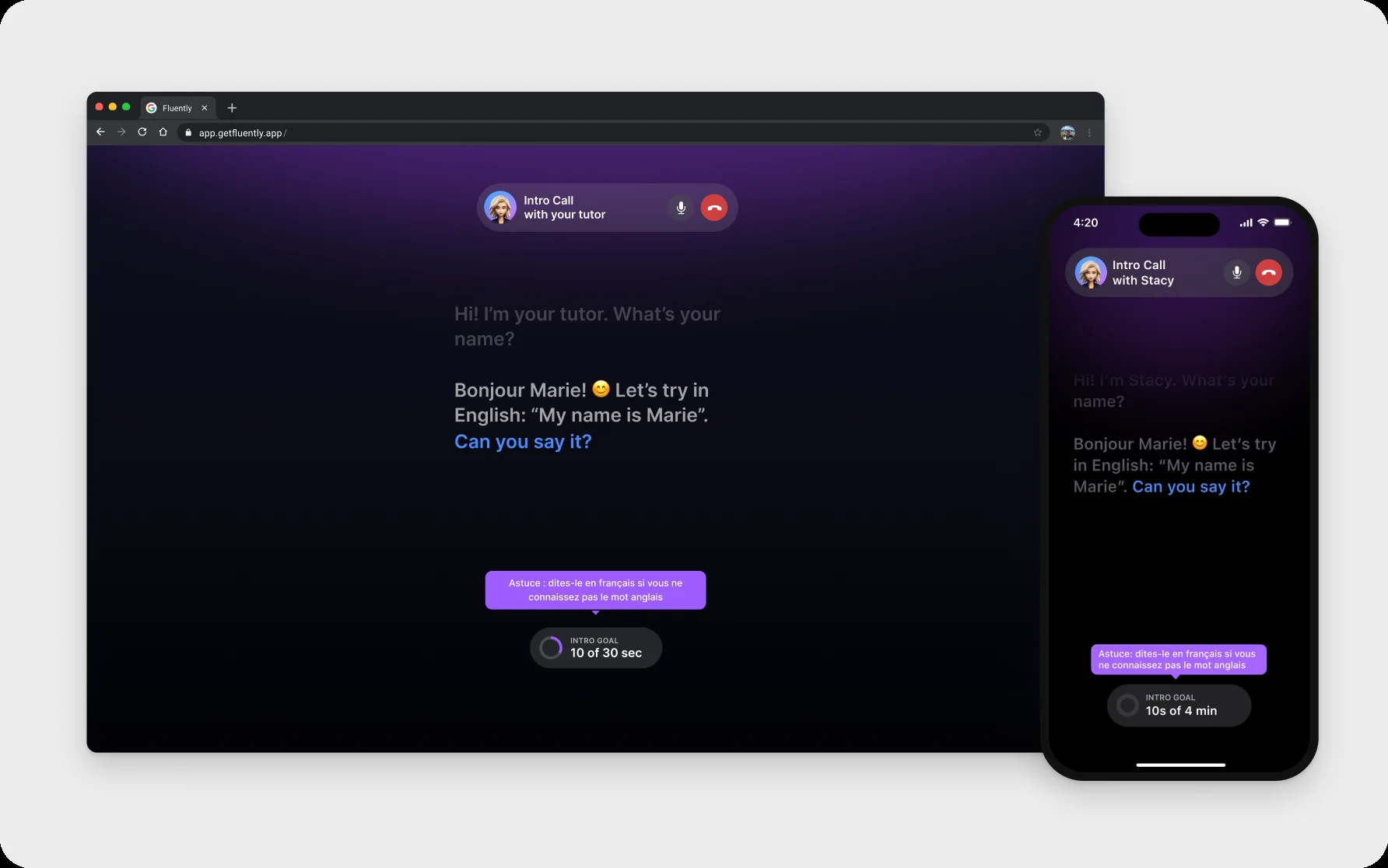
I proposed that the tutor understand the learner's native language from the first call. When a beginner runs out of words, they answer in their own language, and the tutor helps them say it in English. Then I designed the whole beginner path, from choosing a level to the call summary, in the app and on the web.
I studied how live tutors and other apps work with beginners
Teachers simplify a question until the beginner can answer, then raise the bar again. I took this mechanic as the base and went through the first speaking screens in Duolingo, Speak and Praktika. This gave me three rules for every screen of the flow.
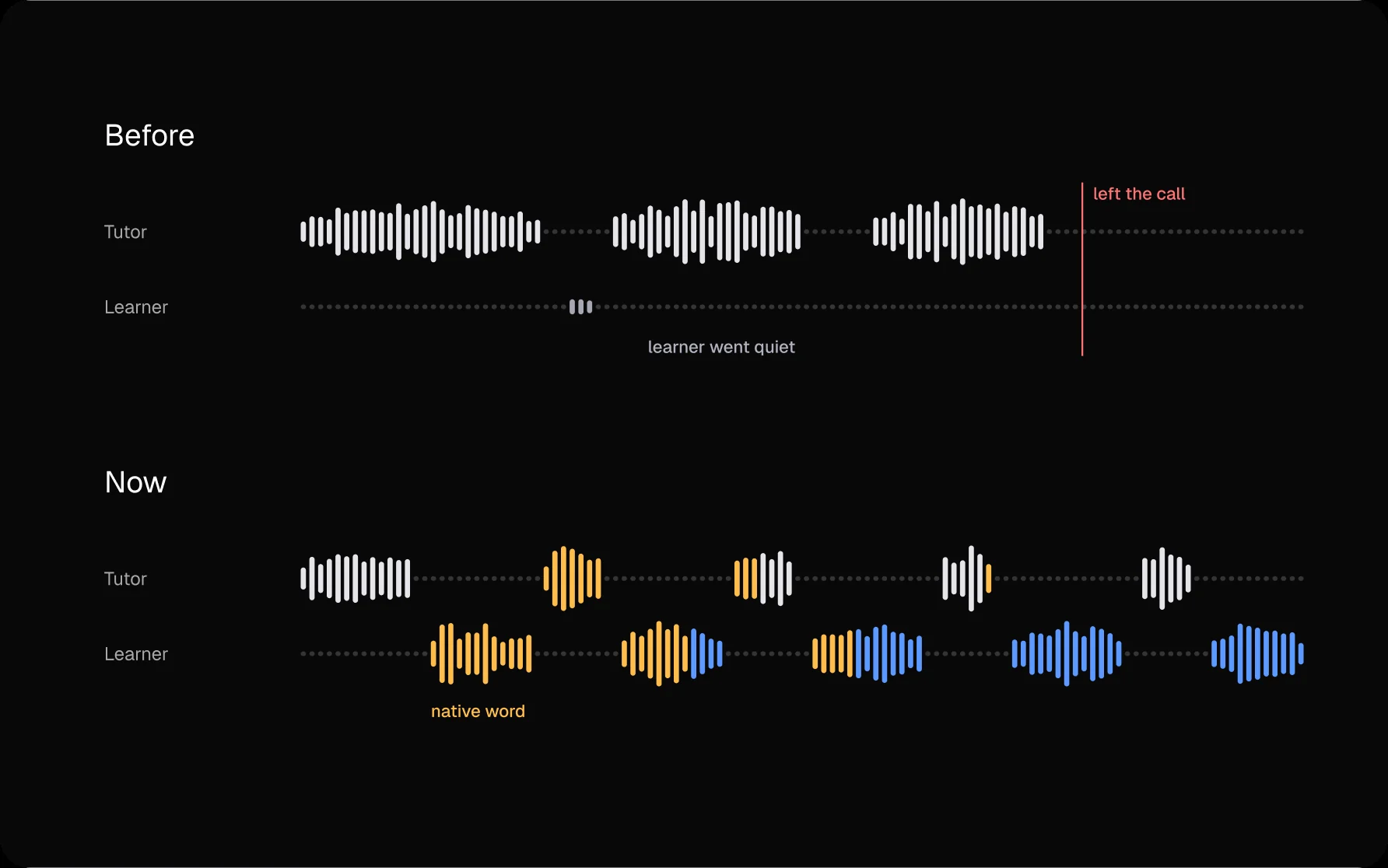
1. Never leave them in silence.
If the learner goes quiet, the next step is always easier.
2. Help in the native language.
The tutor understands the native language, but every line ends with an English phrase.
3. Praise what they said.
Show progress, not a list of mistakes and low scores.
A goal they can reach
If the learner picks Beginner, we ask for their native language. The intro screen explains that they can answer in it when they run out of English words.
A call without silence
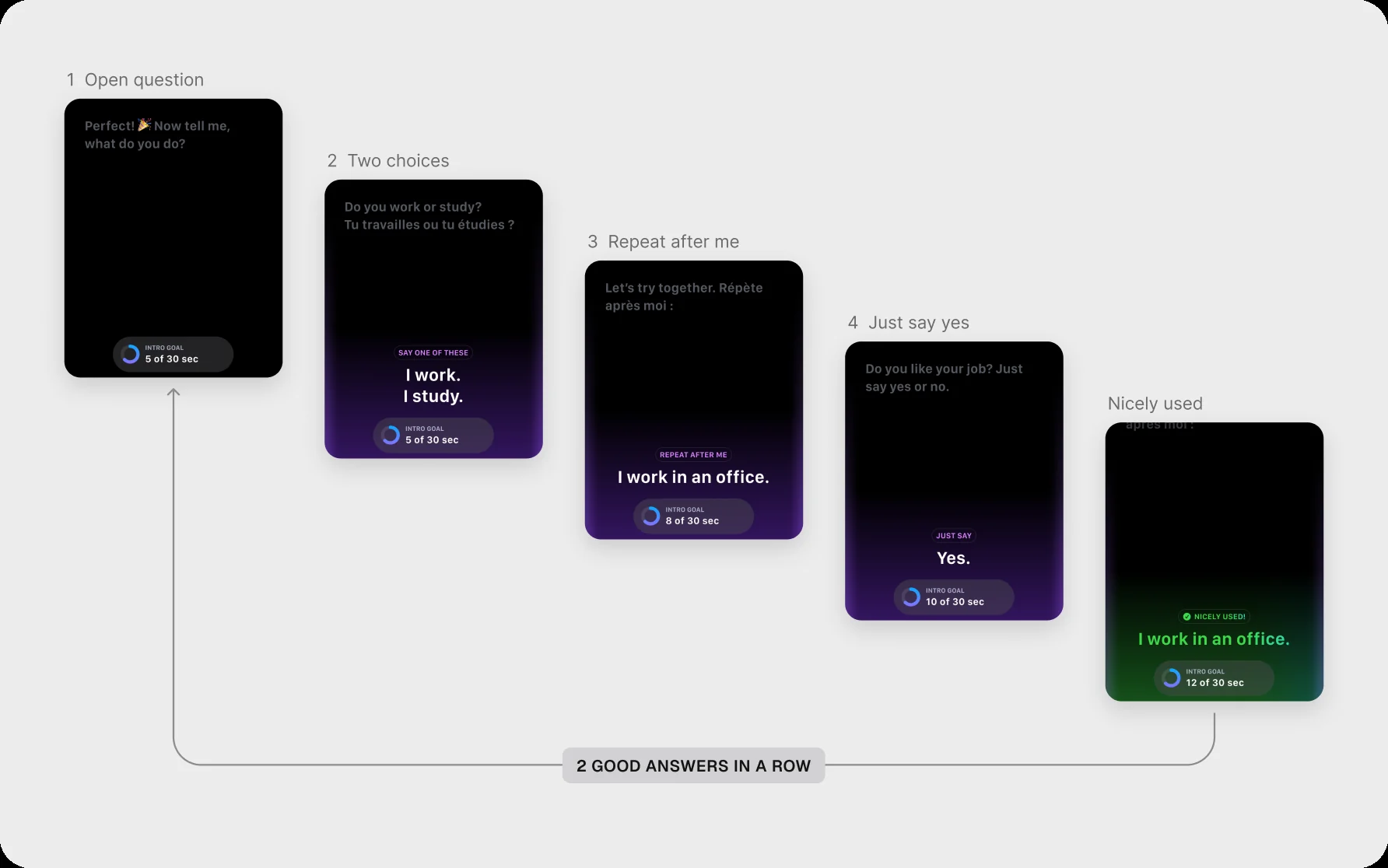
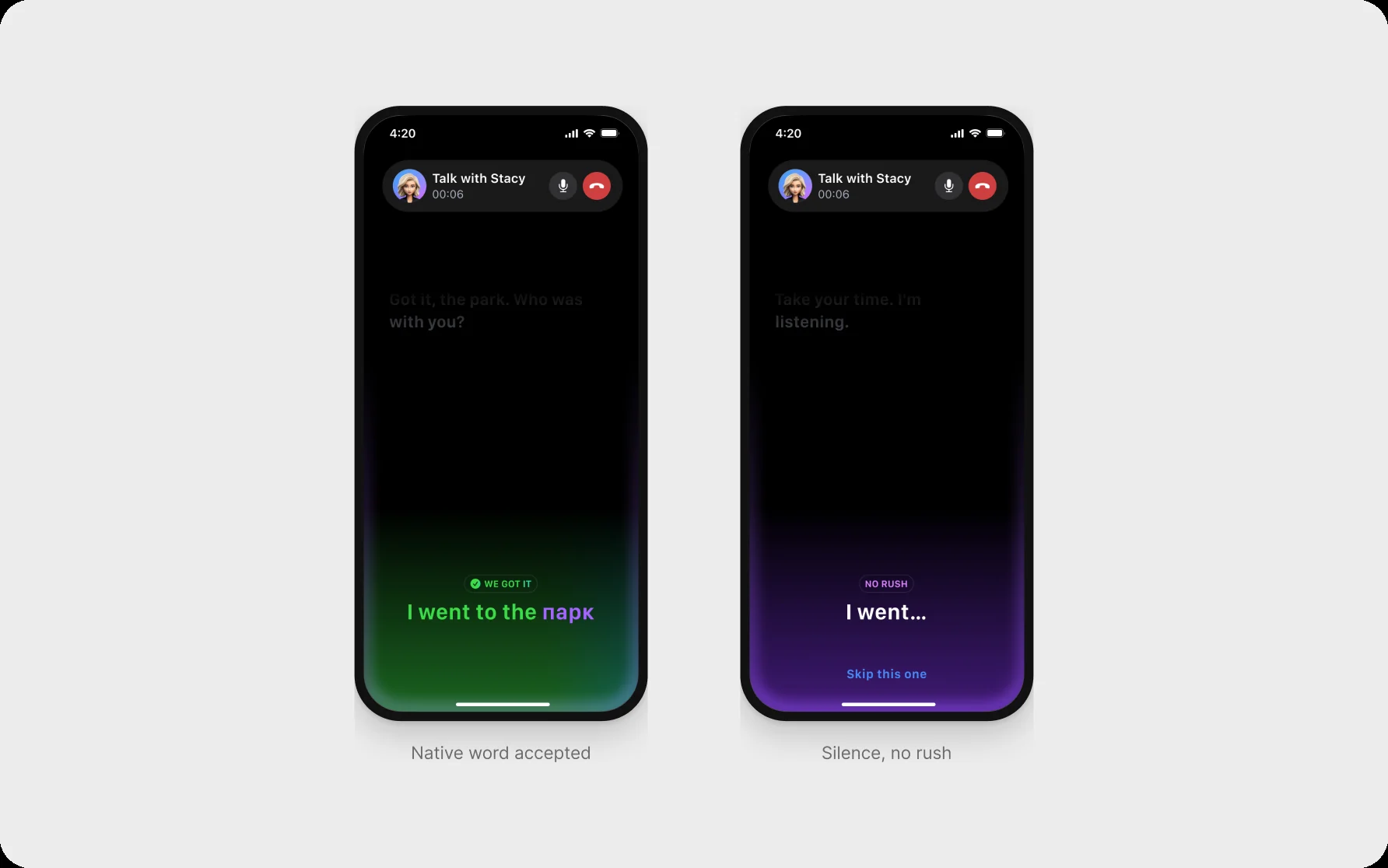
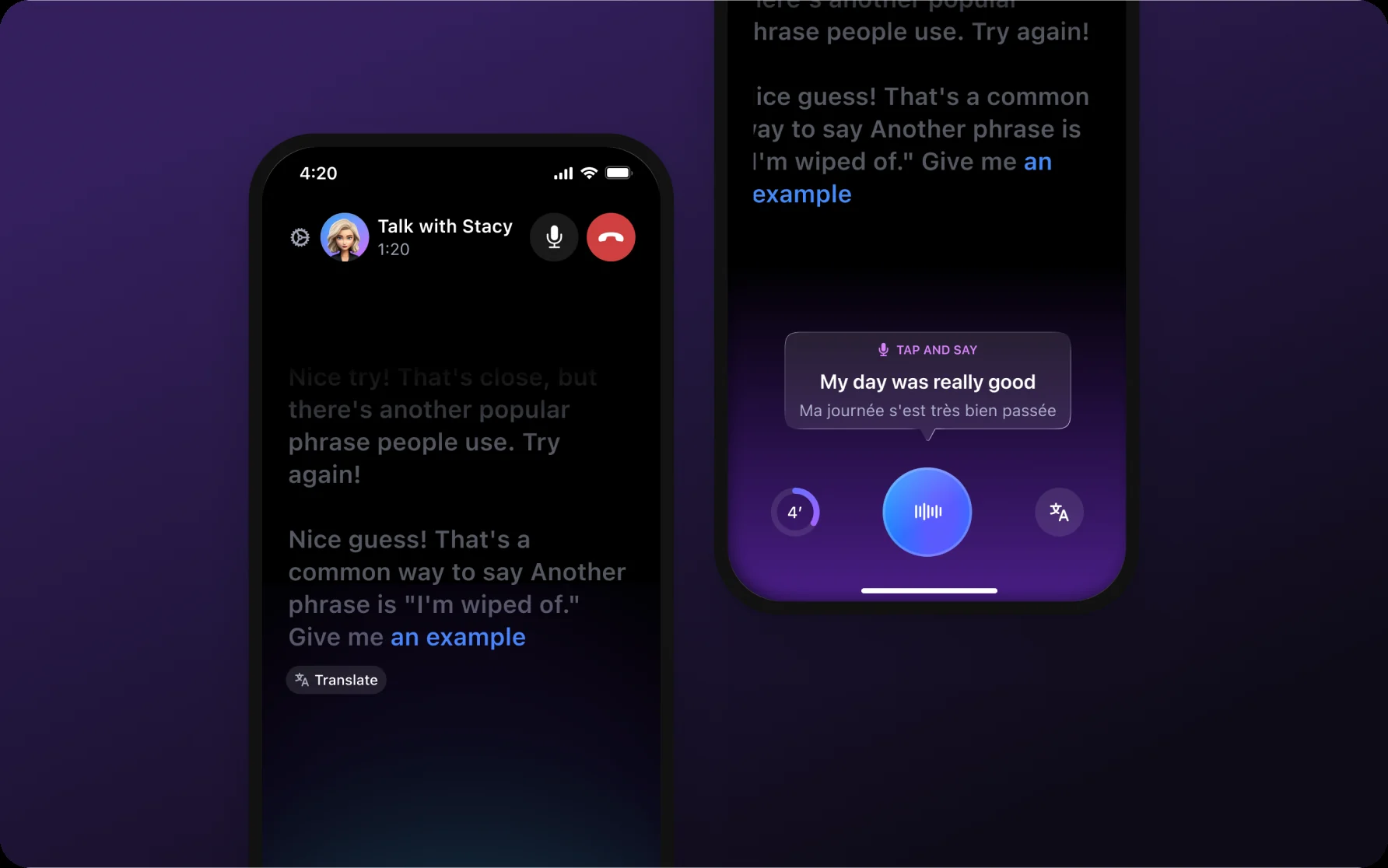
If the learner goes quiet, the tutor simplifies the question: two answer options, a phrase to repeat, one word. Native words in the answer count.
Hints that fade
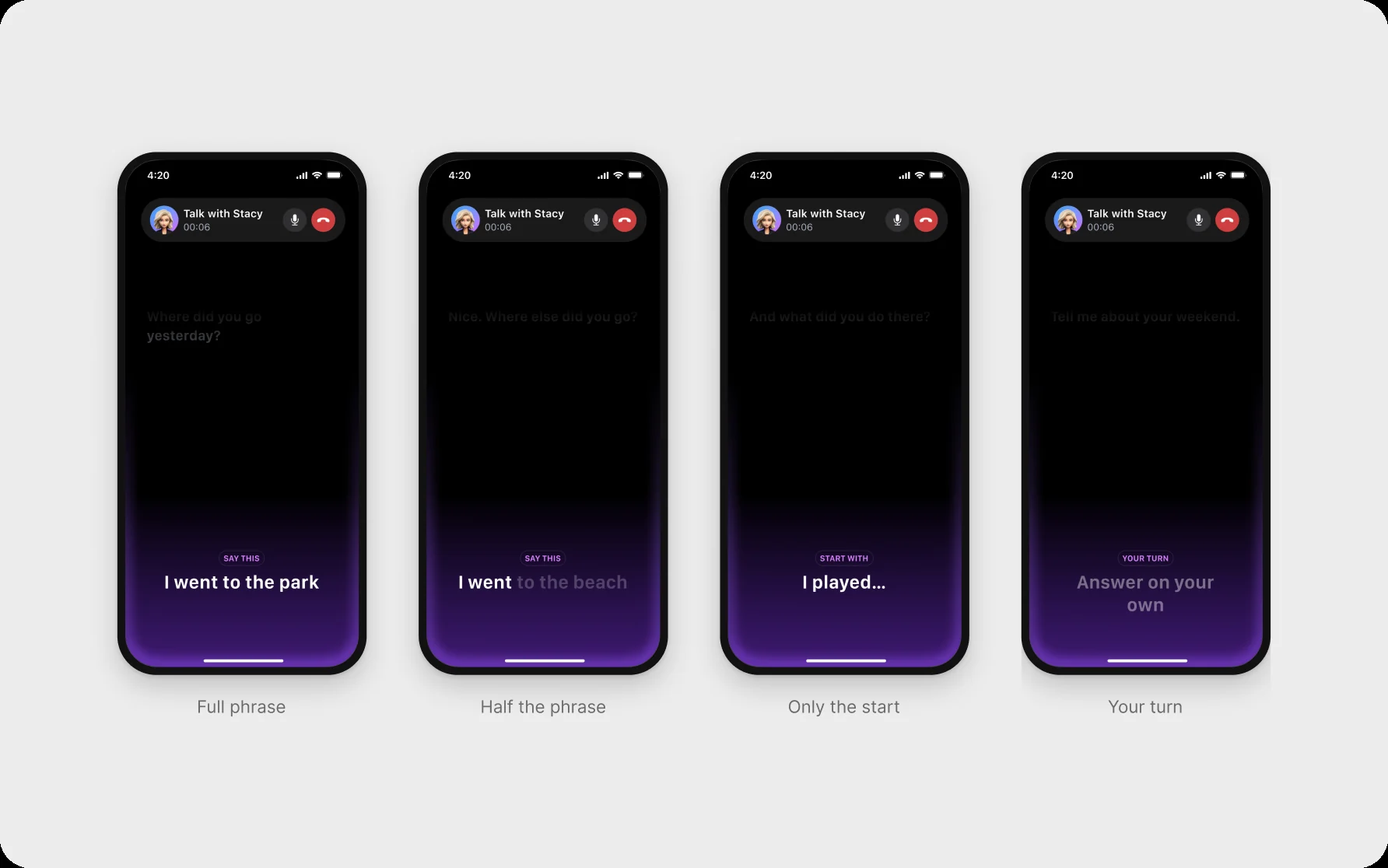
Within one topic the hint fades step by step: first the whole phrase, then half, then just the start. In the end the learner speaks on their own.
Text and translation at hand
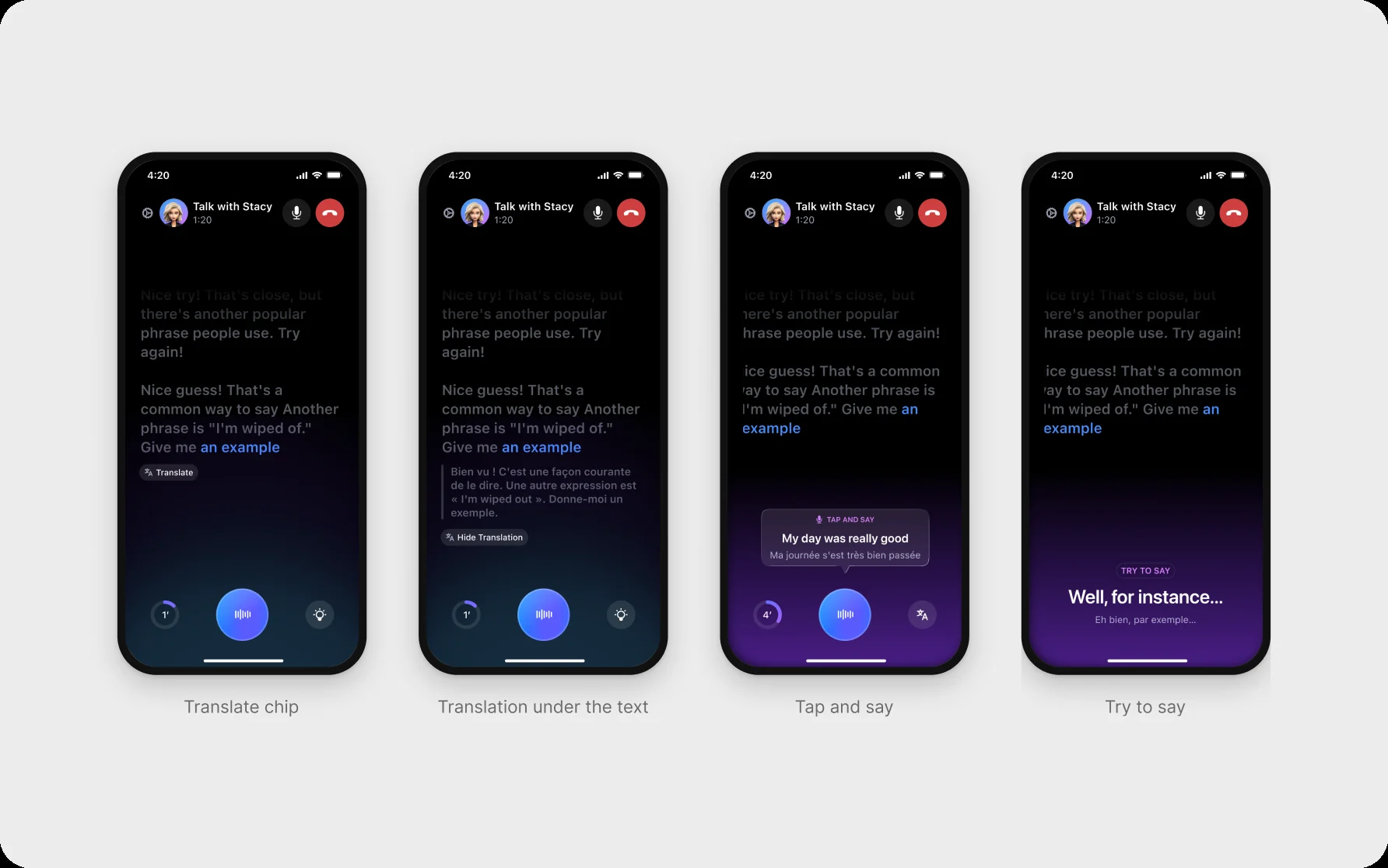
The tutor's line stays on screen, and one tap shows the translation right below it.
A summary instead of a grade
Instead of a chart with scores, beginners see how long they spoke English, how many phrases they learned and one next goal.
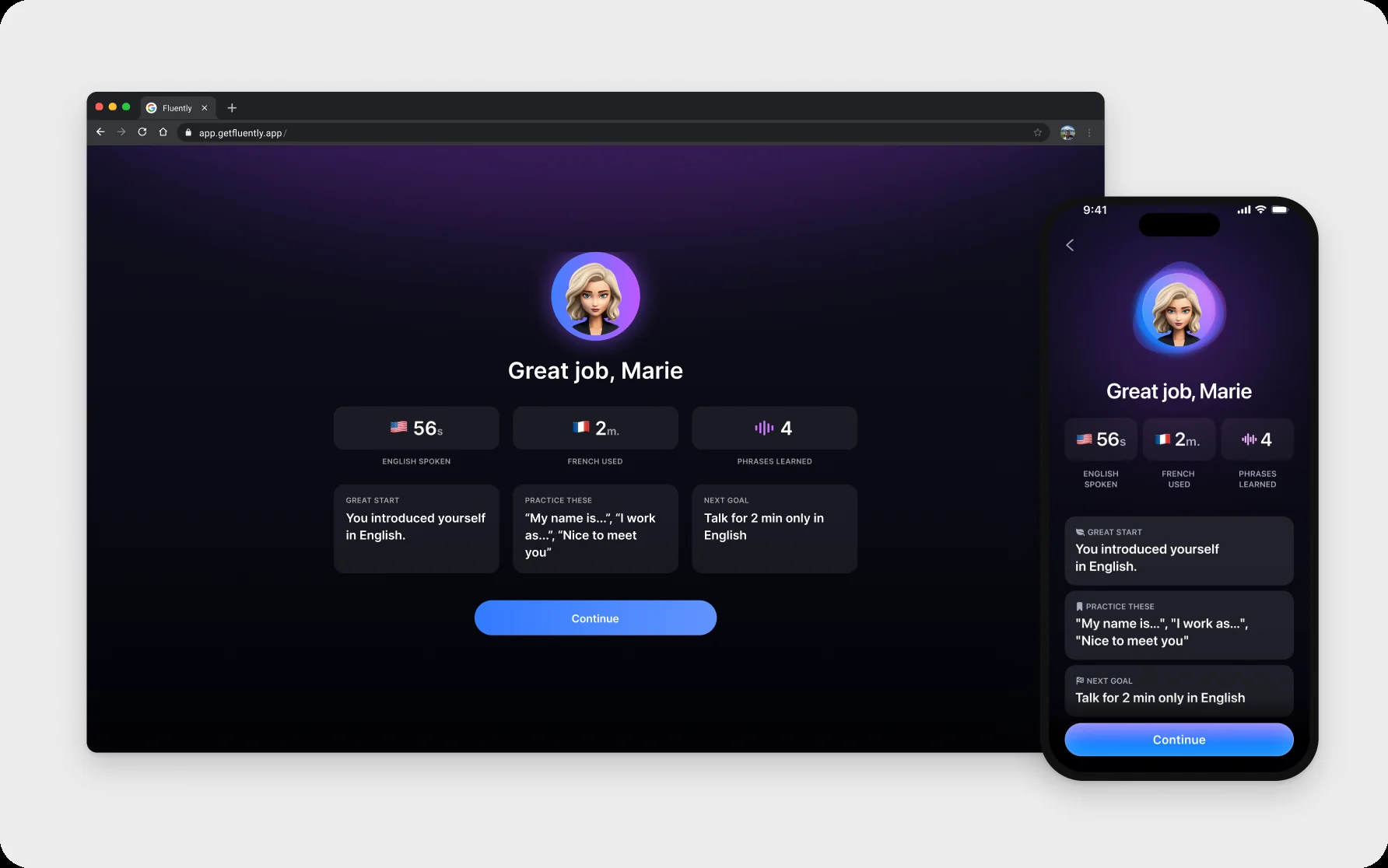
No level score for beginners.
A chart with low scores is honest, but at A1 it only demotivates. We show it later, once there is progress.
Native words are accepted, not corrected.
In the first call, it matters more that the learner keeps talking than that every word is in English.
The tutor's text stays on screen.
Disappearing captions look cleaner, but beginners need to reread the question after the tutor finishes.
The first call now works for people who are just starting out. The product got a way to keep A1-A2 learners who used to leave at the first step.
- +12%
- of beginners finish the first call
- +34%
- speak English for 30+ seconds
- +6%
- beginner D7 retention